Family gathering at home
Hang banners across the room where the family eats together, and one over the entryway to welcome guests. Marigold-orange and purple table linens pick up the colors in the flags.

Día de los Muertos decorations often begin with papel picado: rows of cut flags hung above the ofrenda, the doorway and the gathering where families remember their loved ones. This plastic papel picado set brings Day of the Dead designs, including calaveras and Catrinas, to home altars, school displays and community celebrations, and its waterproof plastic can hang outdoors and be saved for next year.
Part of our Mexican party supplies collection of papel picado and handmade piñatas.
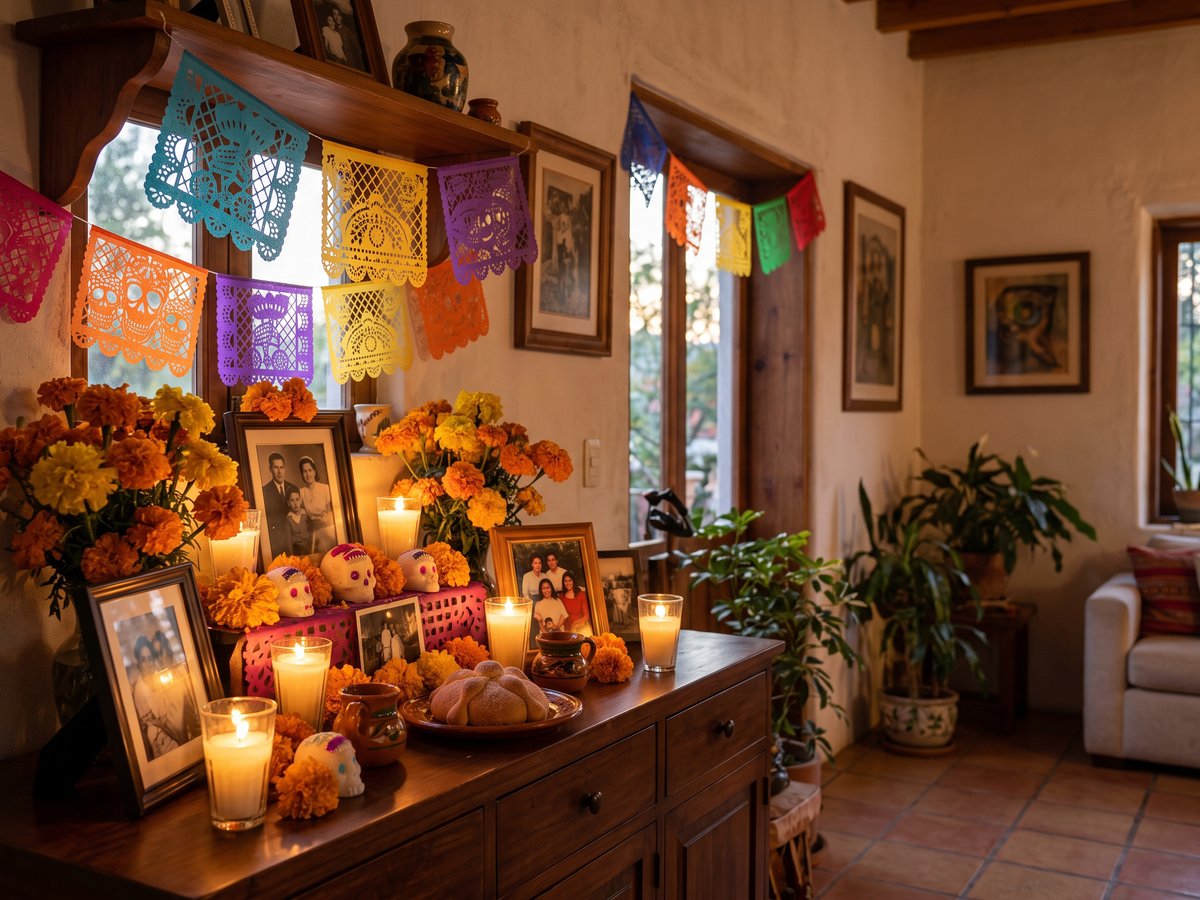
Día de los Muertos is a Mexican tradition, observed mainly on November 1 and 2, when families honor relatives who have died. It's a time of remembrance and warmth rather than fear: families build ofrendas with photos, marigolds, candles and favorite foods, visit and clean graves, and share stories.
It is not the same as Halloween, even though the dates are close. Customs vary from region to region and family to family.
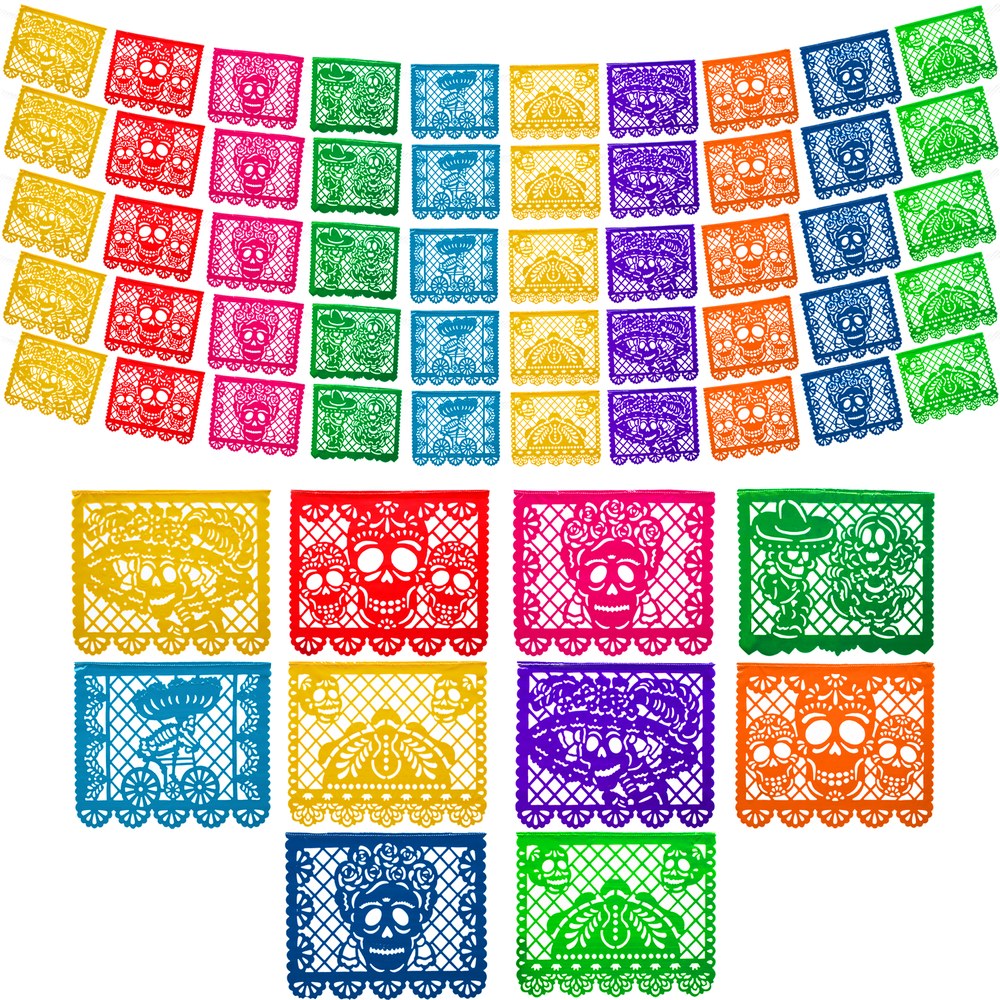
Five multicolor plastic banners (listed as "Catrina Multi-color") with Day of the Dead cut-out flag designs such as calaveras (sugar skulls) and Catrina figures, ten designs per banner. Crafted in Central Mexico by local artisans.
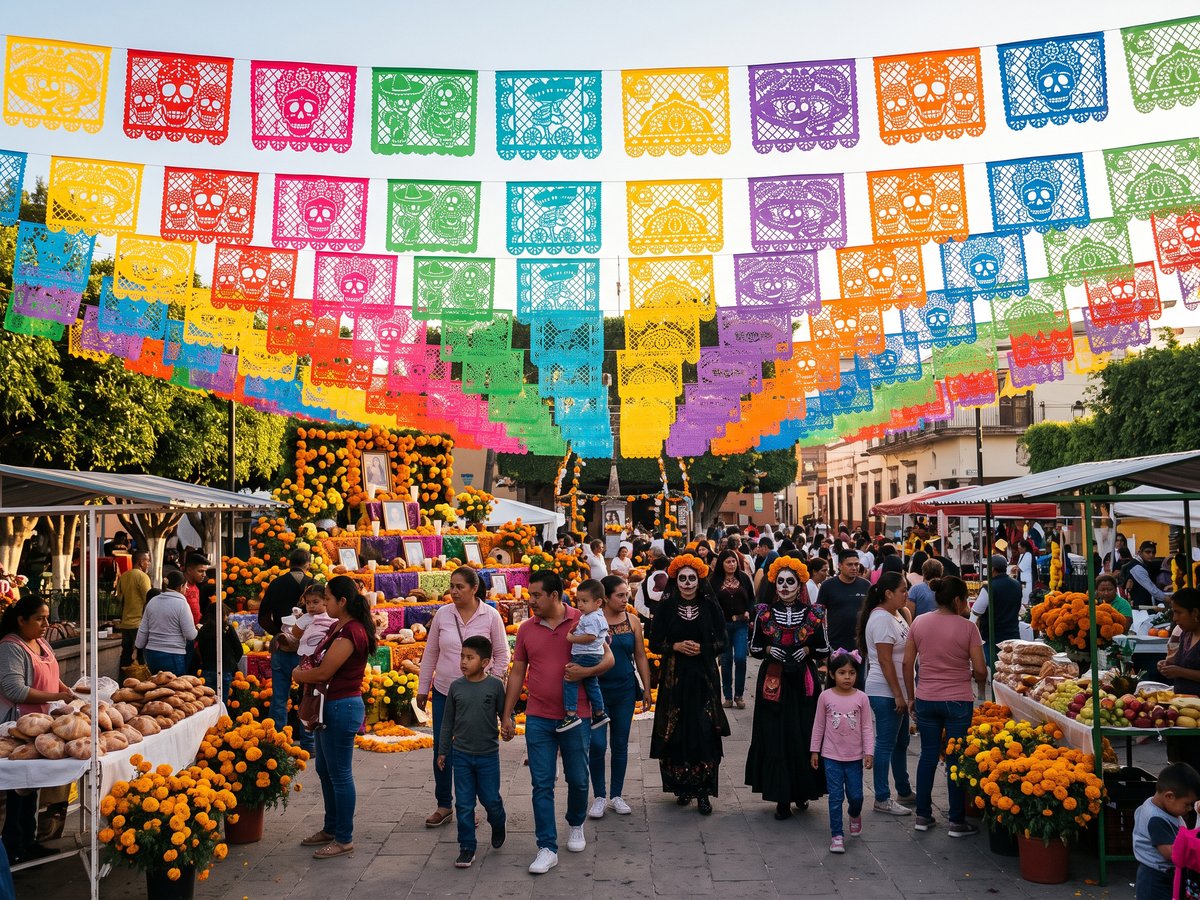
Hang banners across the room where the family eats together, and one over the entryway to welcome guests. Marigold-orange and purple table linens pick up the colors in the flags.
Because the banners are waterproof plastic, they can stay up outdoors through the first days of November. Cross them between posts or trees over the space where people gather.
Line a plaza, parish hall, festival walkway or cemetery-visit gathering area. The full set gives 92 feet of banner.
Frame a bulletin board or a class ofrenda project, so students can learn what the calaveras and Catrina designs mean.
Decorate a shared ofrenda where colleagues or neighbors are invited to add a photo, or a lobby display about the holiday.
Run banners across the ceiling or storefront for the season; plastic can stay up for weeks and be stored afterwards.
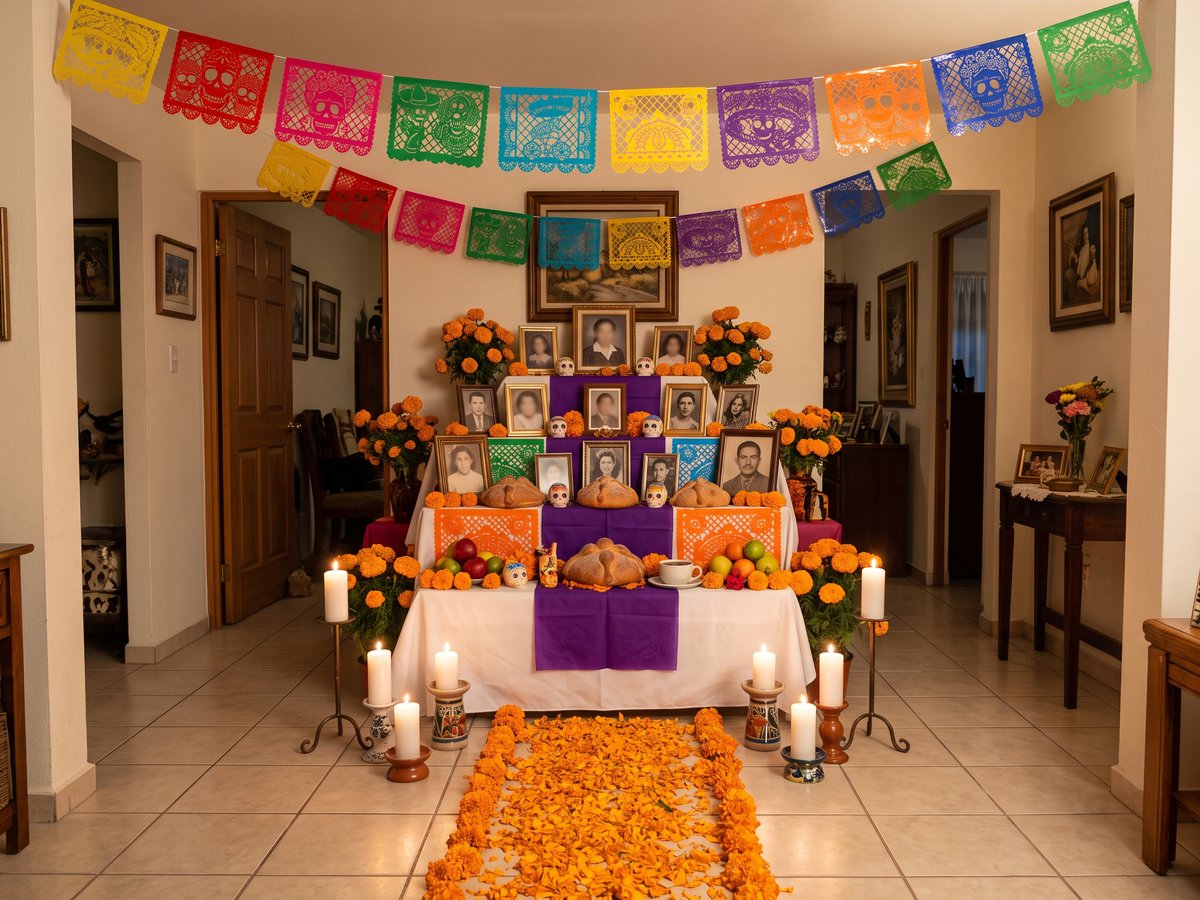
Every ofrenda is personal. At its heart are the people being remembered: their photographs, the foods and drinks they loved, candles, marigolds and keepsakes. Papel picado is one decorative element many families add around those things; it frames the altar rather than replacing anything on it.
Papel picado is traditionally cut from tissue paper. Plastic keeps the cut-flag look with a more practical material.
| This plastic set | Tissue paper papel picado | |
|---|---|---|
| Look | Bold color, slight sheen, Day of the Dead designs | Matte, delicate and translucent |
| Outdoors | Waterproof with UV protection, per the listing | Best indoors or under cover |
| Next year | Rinse, store and reuse | Designed for single use; reusable with gentle handling |
| Size | 18.4 ft banners, 16 × 12.5 in flags | Fiesta Wraps tissue banners: 14.8 ft, 13.8 × 8.7 in flags |
| Good for | Patios, community events, displays that stay up for weeks | An indoor home ofrenda with the traditional paper feel |
Prefer tissue paper? See our tissue papel picado on the hub.
Día de los Muertos, the Day of the Dead, is a Mexican tradition in which families honor and remember relatives who have died. Homes are decorated with ofrendas holding photos, marigolds, candles and favorite foods, and families often visit and decorate graves. It is a celebration of memory and connection rather than a somber or frightening holiday, and customs vary by region and family.
Día de los Muertos is observed mainly on November 1 and 2. In many places, November 1 is dedicated to children who have died and November 2 to adults, and some families begin preparations in late October. Many people set up decorations and ofrendas in the days before November 1.
No. Halloween, on October 31, has roots in Celtic and Christian traditions and focuses on costumes and spooky fun. Día de los Muertos is a Mexican tradition centered on remembering and honoring loved ones who have died. The dates are close and both use skull imagery, but their meaning and customs are different.
Yes. Many families hang papel picado above or around the ofrenda, and plastic papel picado works the same way while lasting longer. Keep it as a frame around the altar so the photos and offerings stay the focus, and hang it well away from candle flames. Tissue paper is the traditional material if you prefer that look.
The Fiesta Wraps Día de los Muertos set, listed as Catrina Multi-color, has Day of the Dead cut-out designs such as calaveras (sugar skulls) and Catrina figures, with ten designs per banner in bright colors. It includes five banners, each 18.4 ft long with ten 16 × 12.5 in flags. Check the Amazon listing photos to see every design before ordering.
Yes. The listing describes it as waterproof plastic with UV protection to resist fading, so it suits patios, gardens and outdoor community gatherings. Tie each banner securely at both ends, and take the banners down, rinse if needed and store them dry after the celebration to reuse them next year.
Tissue papel picado is the traditional material: delicate, translucent and best kept indoors, and designed for single use. Plastic papel picado keeps the cut-flag look in a waterproof material that can hang outdoors and be stored and reused. Fiesta Wraps offers both; see our tissue papel picado.
Five plastic papel picado banners with Day of the Dead designs, 92 feet in all, crafted in Central Mexico, waterproof for outdoor displays and ready to reuse next November.
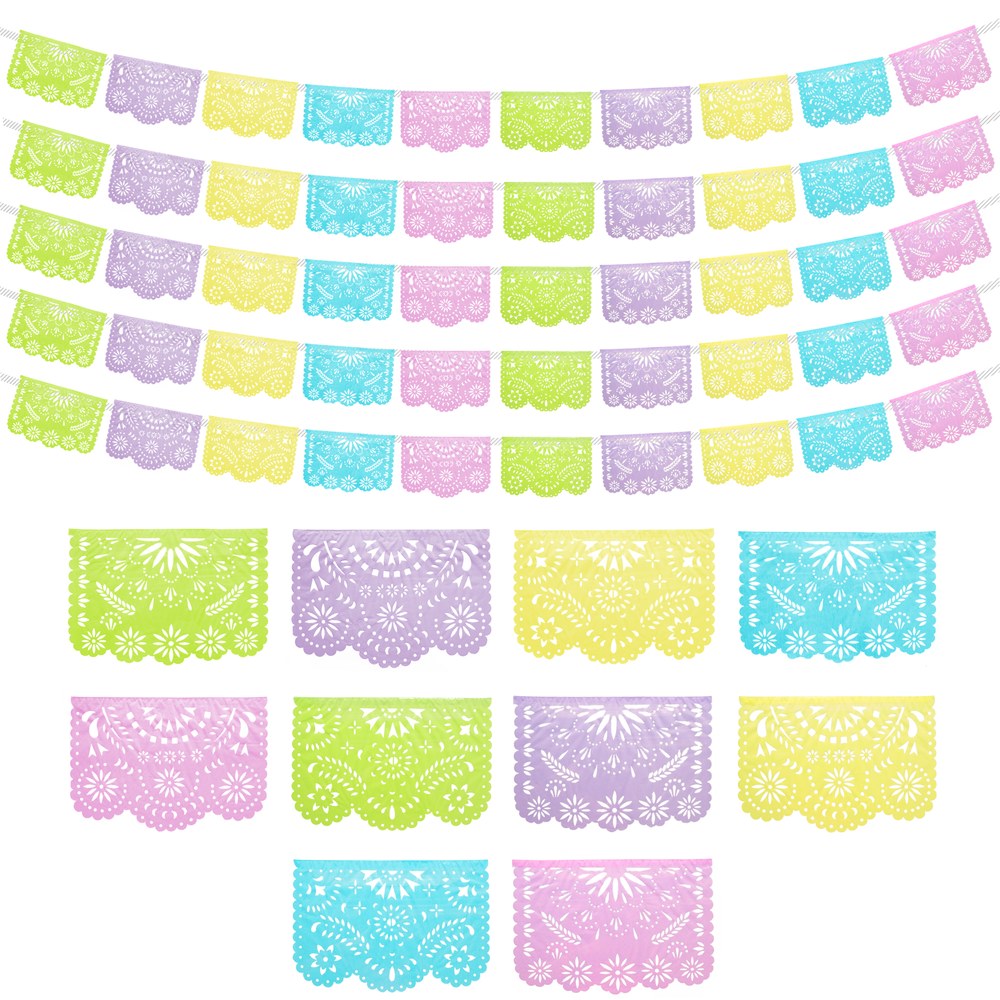 Tissue papel picado
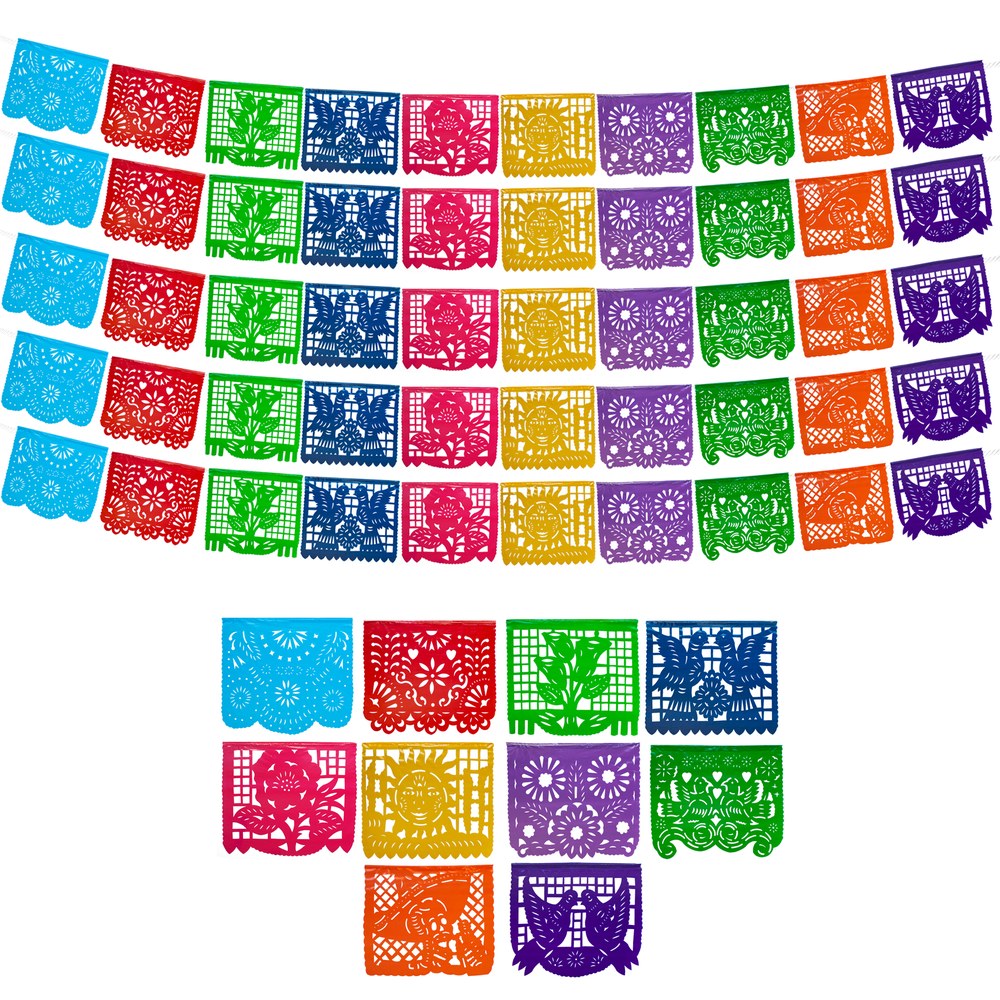 Mexican Independence Day
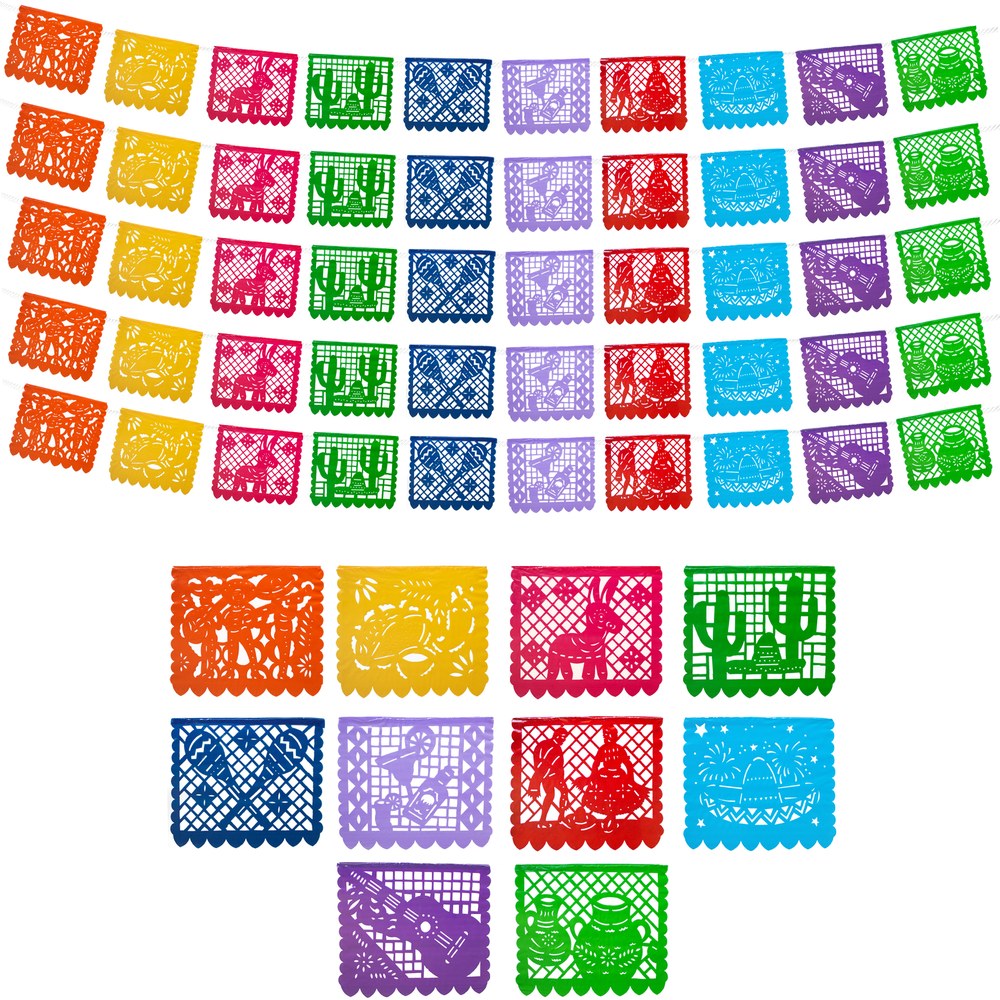 Cinco de Mayo
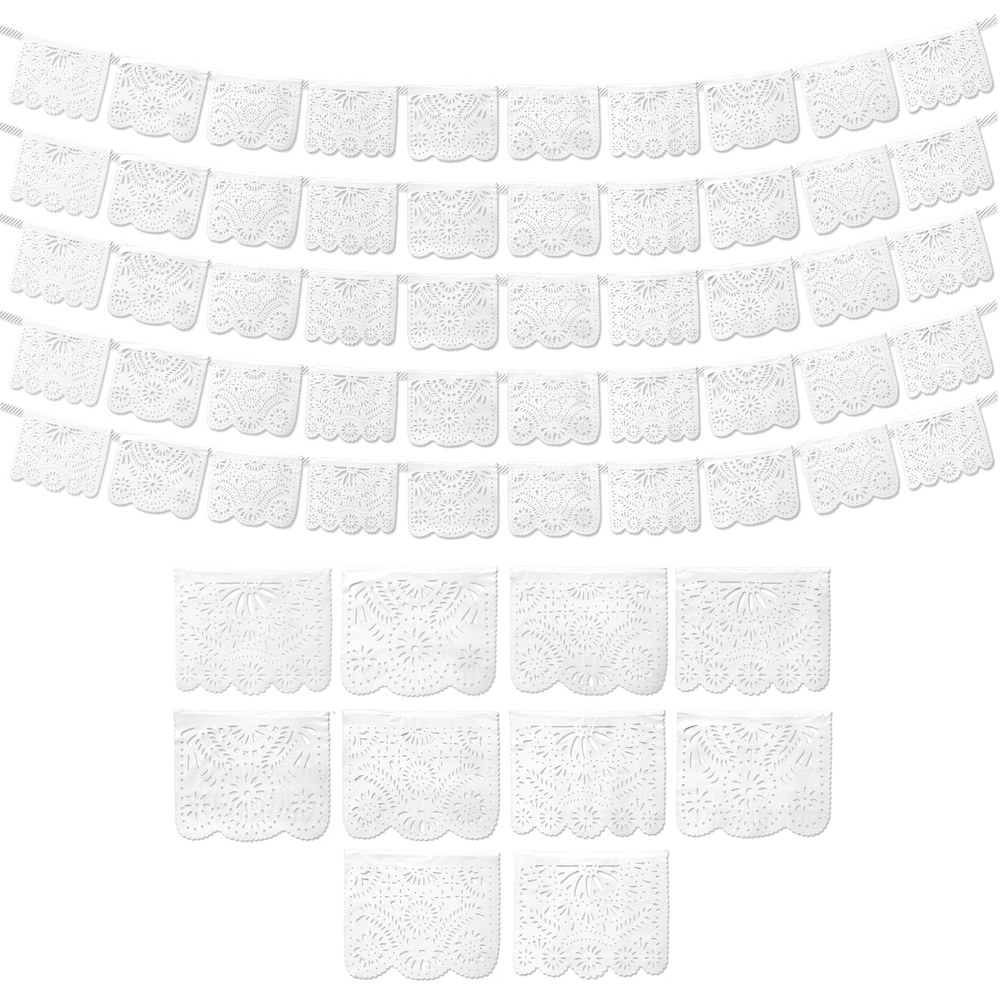 White plastic papel picado