A tricolor ceiling
Run four or five banners across the dining room or living room in parallel rows. The repeating green, white and red reads clearly even from across the room.

For Mexican Independence Day decorations, few things say September 16 like green, white and red papel picado overhead. These tissue paper banners bring the colors of the Mexican flag to a fiestas patrias dinner, a classroom or a Hispanic Heritage Month program, with the delicate cut-paper look of the traditional craft. They're made for indoor and covered spaces.
Explore more papel picado and handmade piñatas in our Mexican party supplies collection.
They fall in the same weeks, but they celebrate different things.
September 16
Mexico's national holiday, marking the 1810 start of its independence movement. Celebrations open on the night of the 15th with El Grito and continue with fiestas patrias on the 16th. Green, white and red, the colors of the Mexican flag, are everywhere.
September 15 – October 15
A month recognizing Americans with roots in Mexico, Central and South America, the Caribbean and Spain. Each community brings its own traditions; papel picado and green, white and red represent the Mexican part of that story.
About papel picado: "perforated paper" is a Mexican folk art of cutting intricate designs into tissue paper and stringing the flags into banners, hung for holidays, religious feasts and family celebrations.
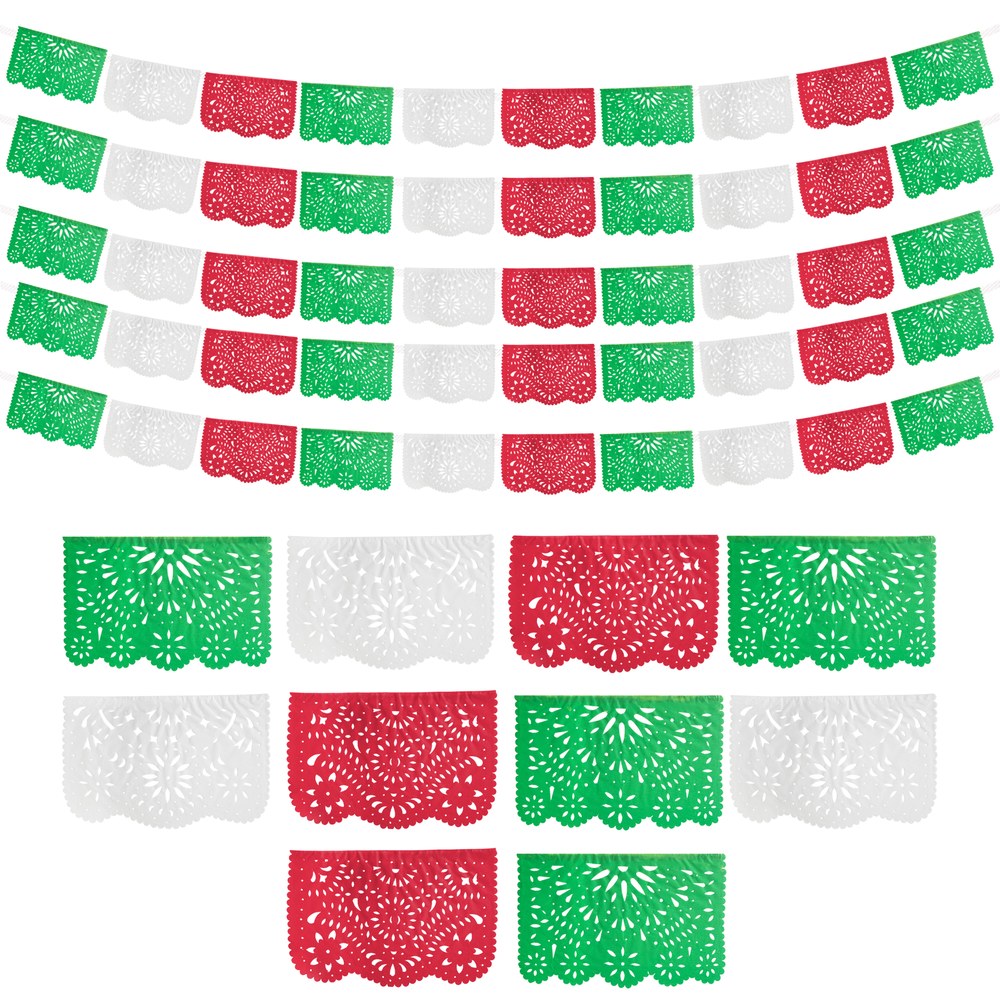
Five banners of real tissue paper cutouts in green, white and red, with ten cut-out flag designs on every banner. Made in Central Mexico.
Good to know: tissue paper isn't waterproof. The banners are designed for single use, but with gentle handling they can be stored and reused.
Most of these work indoors or under a porch roof, where tissue paper looks its best.
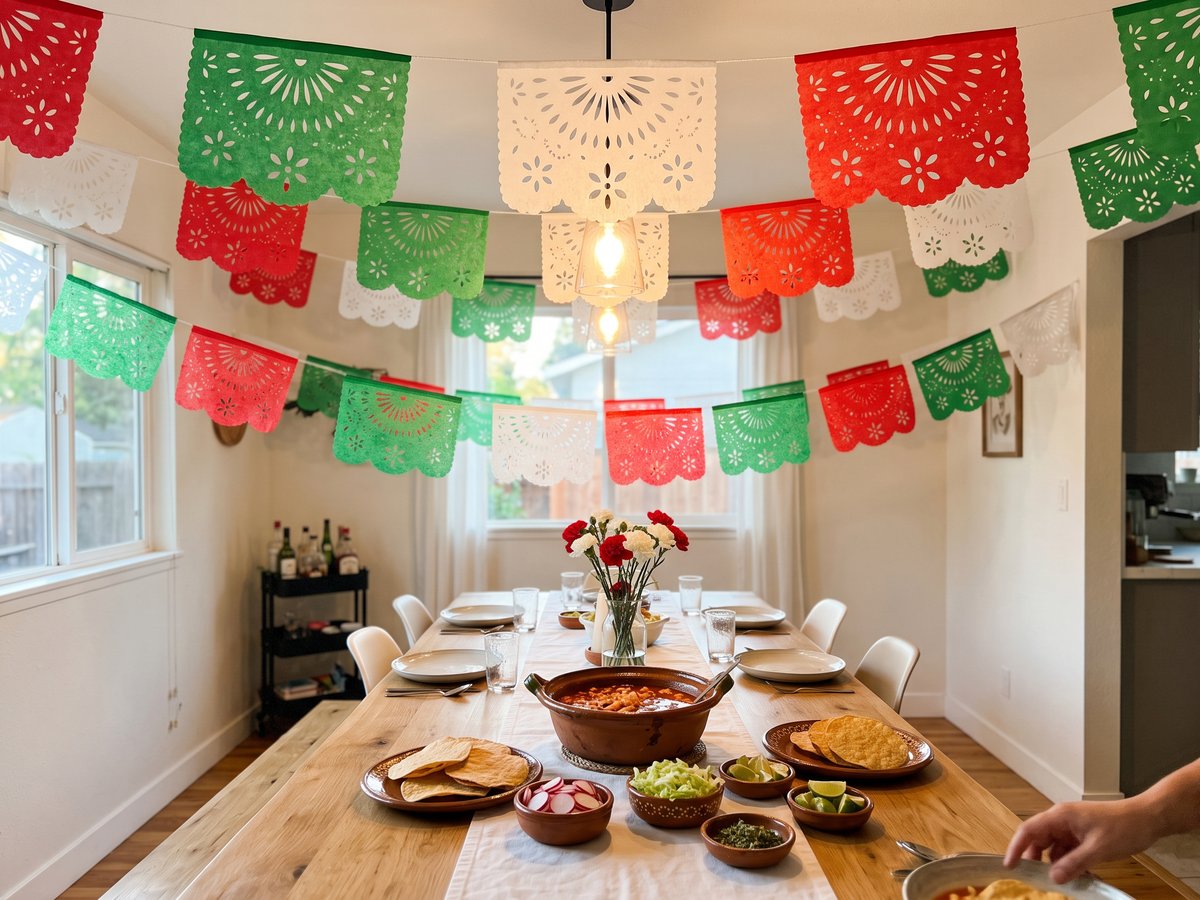
Run four or five banners across the dining room or living room in parallel rows. The repeating green, white and red reads clearly even from across the room.
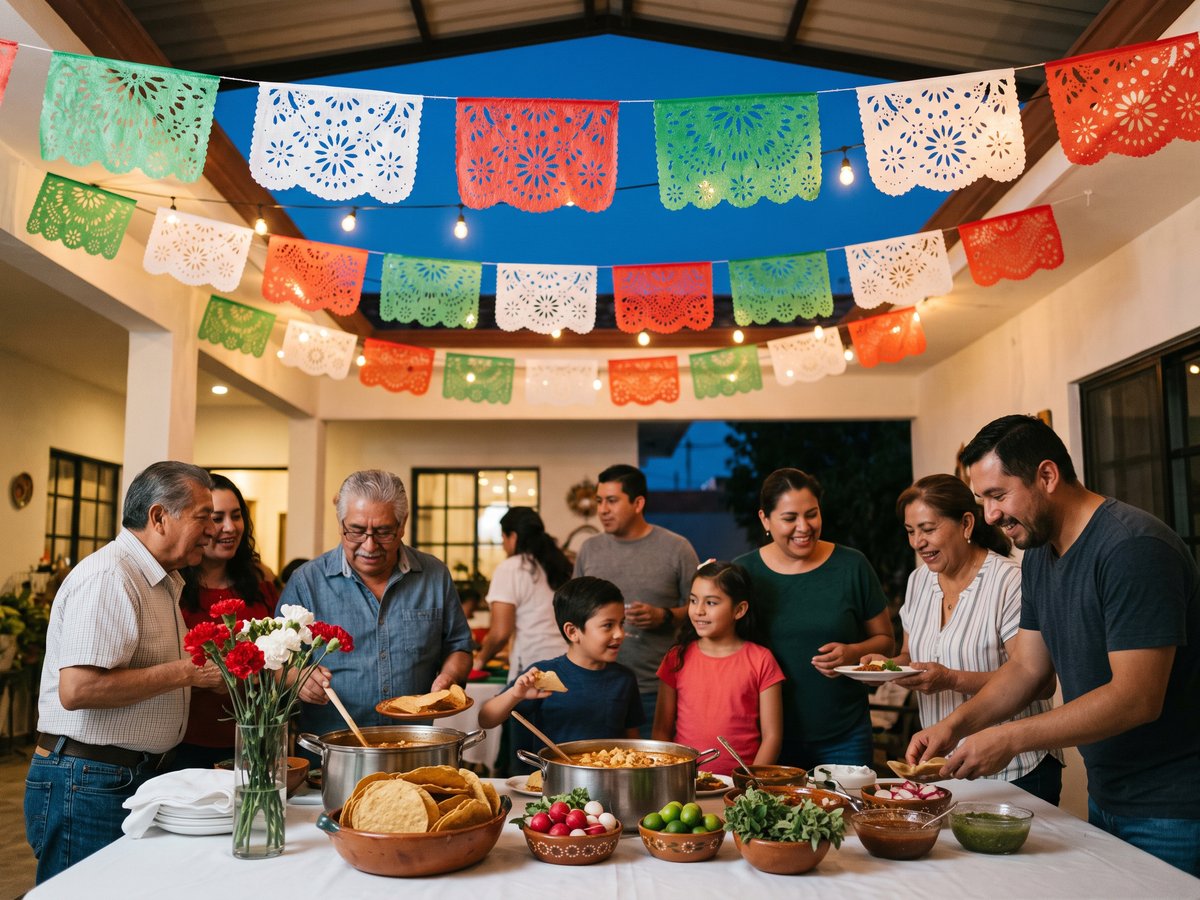
Hang one banner along the wall behind the food. Pick up the colors with a white tablecloth, red radishes and green limes and cilantro on the table.
Hang three banners in close rows on a plain wall. It makes an easy backdrop for family photos before the Grito at night.
Under a roof or pergola, string the banners from post to post. Bring them inside if rain is on the way.
Pair tricolor banners with multicolor papel picado for a fuller fiesta look; for open-air yards, our plastic papel picado for Independence Day holds up outdoors.
A handmade star piñata under the banners gives kids their own part of the celebration.
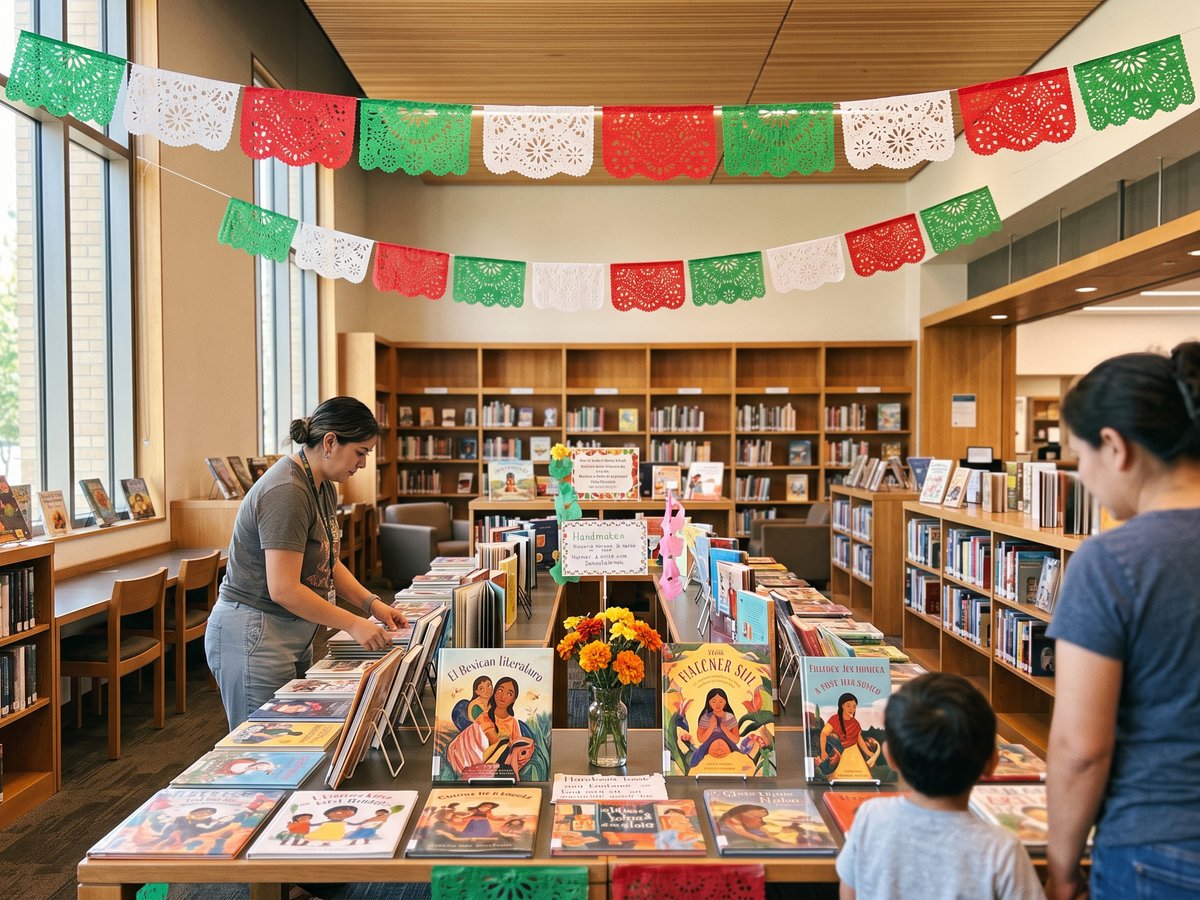
Tissue papel picado suits displays that are seen up close and indoors, which describes most Hispanic Heritage Month programs.
Celebrating several cultures at once? Use the tricolor banners for the Mexican display and give other communities' traditions their own space, so each one is represented on its own terms.
Planning guide: with a gentle sag, one 14.8 ft banner spans roughly 13 ft. Hooks and clips are not listed as included.
Green, white and red, the colors of the Mexican flag, are the signature colors of Mexican Independence Day on September 16. Homes, schools and businesses decorate with tricolor papel picado, flags, flowers and tablecloths, often alongside multicolor fiesta decorations. The Fiesta Wraps tricolor set uses all three colors in tissue paper.
Mexican Independence Day is September 16, with celebrations beginning the night of September 15 with El Grito. Hispanic Heritage Month in the United States runs from September 15 to October 15. The two overlap, but they are separate observances: one is Mexico's national holiday, the other honors the heritage of many Hispanic and Latino communities in the U.S.
Yes. Indoor and covered spaces are where tissue papel picado works best. Thin tissue paper shows off the cut-out designs and catches the light, but it has no waterproofing and the banners are designed for single use, so dining rooms, classrooms, libraries, halls and covered patios are ideal. For open outdoor areas, plastic papel picado is the more practical choice.
The set includes five banners made from real tissue paper cutouts in green, white and red. Each banner is 14.8 ft (4.5 m) long with 10 flags, for 74 ft (22.6 m) in total, and each flag measures 13.8 × 8.7 in (35 × 22 cm). The banners are made in Central Mexico. Check the Amazon listing for current details before ordering.
Hang it above a bulletin board, a library book display, a stage for music or dance, or a heritage-night food table. Papel picado is a Mexican folk-art tradition, so it fits best in displays about Mexican heritage, or as one element among decorations from the other cultures your program represents. A small card explaining what papel picado is makes it educational.
With a gentle sag, one 14.8 ft banner spans about 13 ft. A classroom wall or bulletin board usually needs one banner, two or three runs cover a classroom or small party room, and four or five rows across a dining room or hall use the full set of five. Measure your space before ordering.
Possibly. The banners are designed for single use, but with gentle handling they can be stored and reused. Take them down by the string, lay them flat or loosely folded in a dry box, and keep them away from moisture. If you want banners you can rinse and reuse every year, choose plastic papel picado.
Five tricolor tissue paper papel picado banners, 74 feet in all, made in Central Mexico, for Independence Day parties and Hispanic Heritage Month programs indoors.
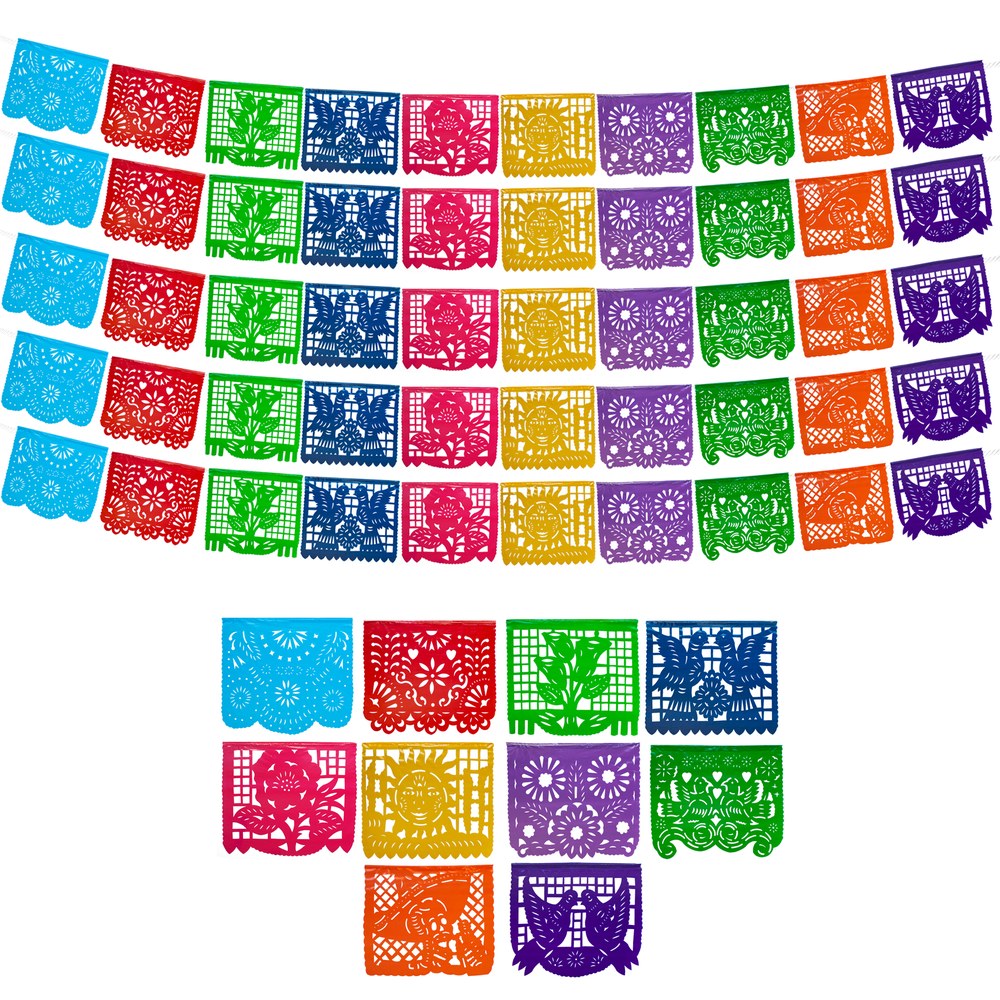 Plastic papel picado for Independence Day
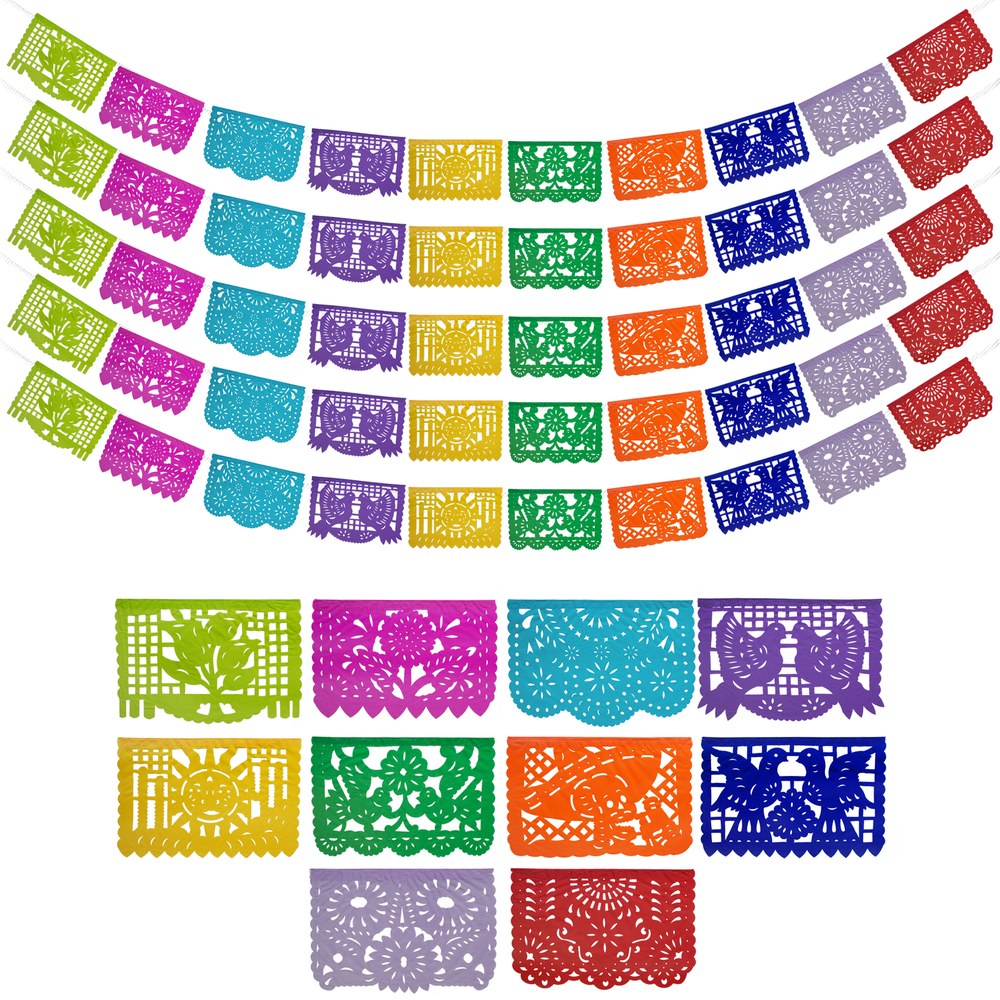 Tissue papel picado for Cinco de Mayo
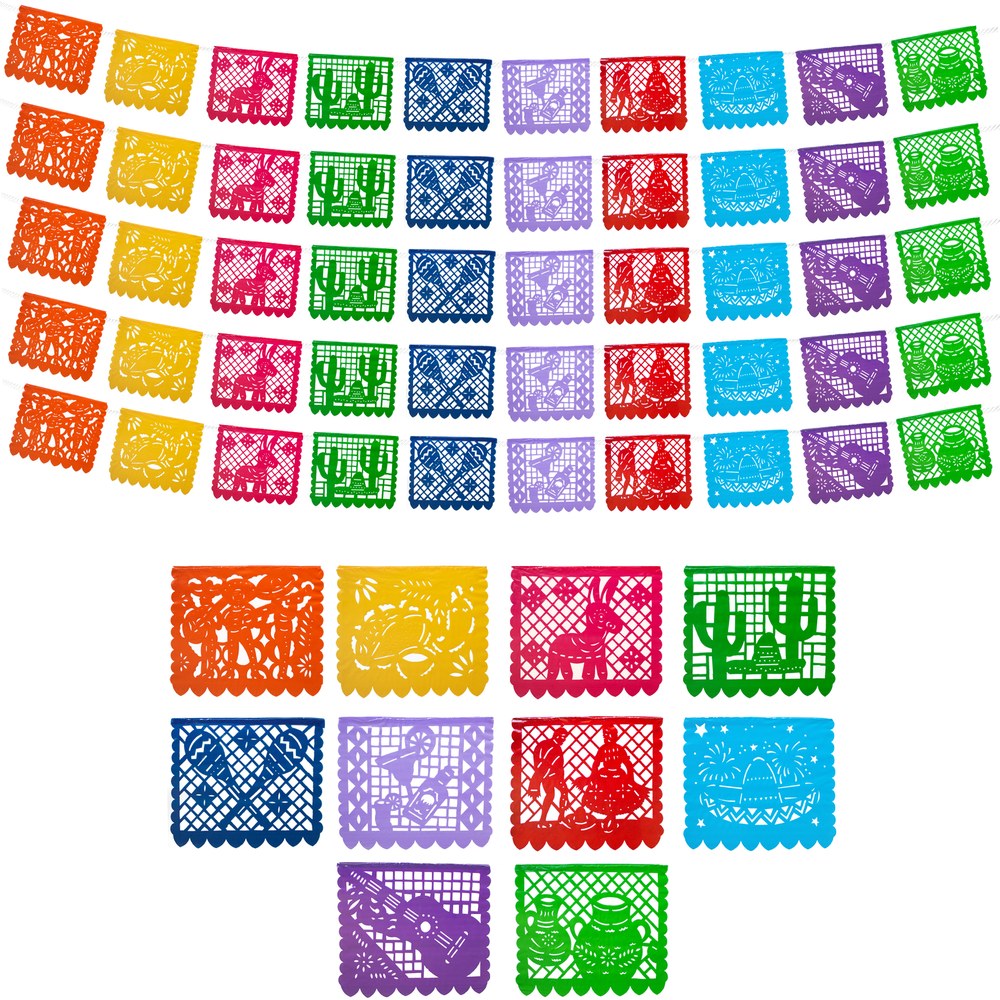 Plastic papel picado for Cinco de Mayo
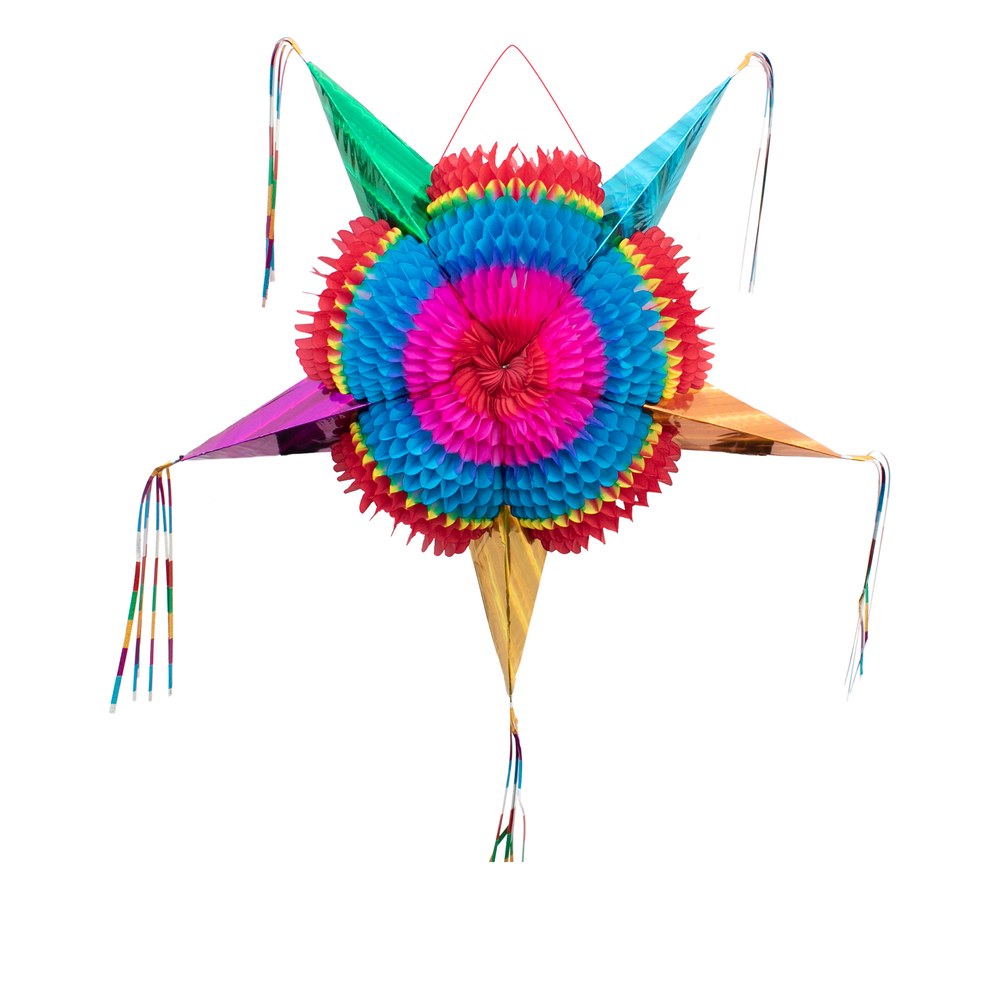 Handmade star piñatas